The Quiet Magic of Punch Needle: Creating Art One Loop at a Time
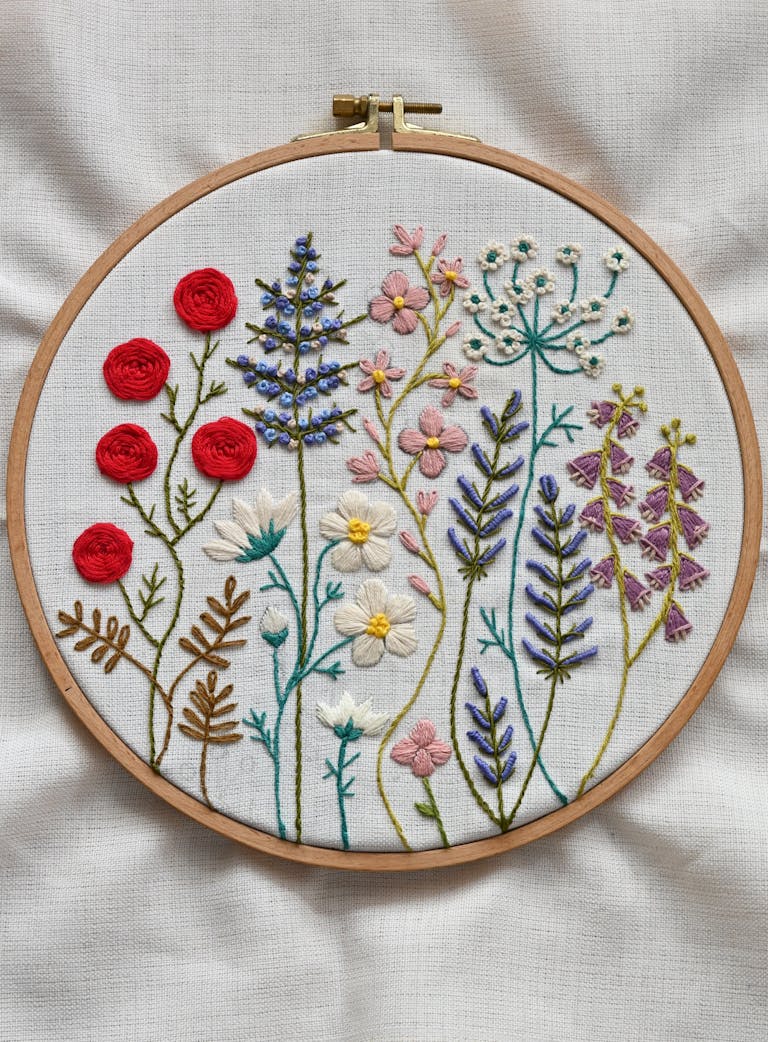
What begins as fabric stretched inside a hoop and a few strands of yarn gradually turns into wildflowers, woodland mushrooms, tiny moons or abstract pieces filled with warmth and personality. The finished artwork is lovely, of course, but what often stays with people is the experience itself: the quiet afternoon spent creating, the repetitive movement of the needle and the calm that somehow appears while working.
Perhaps that is why punch needle has become so loved in recent years. It offers creativity without demanding perfection and allows beginners and experienced makers alike to create pieces that feel handmade in the truest sense.
What Is Punch Needle?
Punch needle is a textile art technique where yarn or thread is pushed through fabric using a hollow needle tool, creating raised loops that build texture and patterns. The result sits somewhere between embroidery, rug making and fibre art, which is part of what gives it such a distinctive look.
Unlike traditional embroidery, where stitches often require precision and careful counting, punch needle tends to feel more intuitive. The process is repetitive in the most comforting way and allows people to focus more on colour, texture and composition than technical perfection.
Many beginners are surprised by how accessible it feels. With only a few materials, it becomes possible to create wall art, cushions, decorative patches, seasonal décor and even personalised gifts.
Why So Many Creatives Fall in Love with Punch Needle
Part of the beauty of punch needle comes from its simplicity. You do not need an entire craft room, expensive equipment or years of experience before starting. In fact, many people begin with a small kit and a single design, only to realise later that they have quietly collected hoops, yarn palettes and project ideas without meaning to.
There is also something uniquely satisfying about working with texture. Watching soft loops appear across the fabric gives the process a tactile quality that feels very different from drawing or painting. The piece slowly rises from the surface and begins to take shape in a way that feels almost sculptural.
For many people, especially those who enjoy mindful hobbies or slower creative activities, the repetitive movement itself becomes part of the appeal. It creates a gentle rhythm that allows the mind to settle while still feeling productive and imaginative.
Beautiful Materials & Kits to Begin With
One of the loveliest things about punch needle is that getting started can remain beautifully simple.
The punch needle tool itself naturally becomes the centre of the process and many beginners enjoy adjustable sets that work with different yarn sizes. Amazon is often useful for finding starter kits with interchangeable needles and beginner accessories, while Etsy tends to offer more artistic versions, handmade tools and beautifully curated sets.
Searching for terms such as:
“beginner punch needle kit”
“adjustable punch embroidery tool”
“wooden punch needle set”
usually brings lovely options.
Fabric is equally important and monk’s cloth remains one of the favourites because it holds loops beautifully and gives finished pieces a soft texture. Linen blends and embroidery fabrics also work wonderfully for smaller projects and decorative hoops.
Yarn is often where the creative side truly begins.
Soft pinks and sage greens immediately suggest cottage gardens and wildflower fields. Earthy tones bring thoughts of woodland scenes filled with mushrooms and moss, while muted greys, creams and dusty blues create celestial pieces inspired by moonlight and evening skies.
Some beautiful palette ideas include:
🌸 Wildflower Meadow – blush pink, sage and soft ivory
🍄 Woodland Moss – olive, brown, cream and forest green
🌙 Moon & Sage – dusty blue, grey and natural linen
🧡 Autumn Library – amber, cinnamon and warm neutrals
These kinds of palettes work beautifully both as affiliate suggestions and future Blooming Way collections.
Beautiful Beginner Projects to Try
If you are just starting, simpler projects often become the most charming because they allow room to explore texture without feeling overwhelming.
Wildflowers remain one of the most popular choices and work beautifully for beginners because petals translate naturally into loops and layered colours. Botanical kits inspired by meadow flowers and cottage gardens can be found easily on Amazon and Etsy through searches such as:
“wildflower punch needle kit”
“botanical punch embroidery”
“floral punch pattern”
Woodland themes are equally loved and fit perfectly within the Blooming Way aesthetic. Mushrooms, moss textures, forest scenes and tiny cottages create projects that feel playful yet elegant at the same time.
Search ideas:
“mushroom punch needle kit”
“forest punch embroidery”
“cottagecore punch art”
Celestial projects have also become increasingly popular. Moon phases, stars and night skies surrounded by florals create pieces that feel soft, magical and timeless.
Searching:
“moon phase punch needle”
“celestial punch embroidery”
“night sky fibre art”
usually reveals beautiful inspiration.
Creating a Punch Needle Ritual
Rather than thinking of punch needle simply as another hobby to finish, many people slowly turn it into a ritual.
A warm drink sits nearby. The yarn is arranged by colour. Soft music plays quietly in the background while the design gradually appears loop by loop.
There is no need to rush.
Some lines may wander slightly.
Some loops may sit differently than expected.
Yet those small imperfections often become part of what makes handmade work feel special, because every finished piece carries traces of the time spent creating it.
And perhaps that is what people really keep when they finish a project.
Not only the hoop hanging on the wall.
But the quiet afternoon stitched inside it.
Final Thoughts
Punch needle reminds us that creativity does not always need to be productive, fast or perfectly planned.
Sometimes it is enough to sit down with fabric, yarn and a few colours that feel beautiful together, allowing something small to slowly appear beneath our hands.
Because in those quiet moments we are not only making art.
We are making space.
For calm.
For creativity.
And for the simple joy of creating something slowly.